
 They found the door to heaven this week! A gentleman named User served as the chief minister to the powerful and long-ruling Queen Hatshepsut of Egypt (15th century BC). In fact for twenty years he was “vizier” (an Egyptian civil officer having viceregal powers) in her palace. Along the way he also acquired the titles of prince and mayor of the city. So while he wasn’t royalty, he hobnobbed with them. In life, and even in death. For archaeologists have found his tomb on the west bank of the Nile at Luxor, the burial ground reserved for kings and queens. User had connections.
But what is intriguing is the ultimate connection he sought. On Monday the Egyptian antiquities authority announced the discovery of a 3500 year old pink granite door that archaeologists have determined belonged to the tomb of User. Nearly six feet tall, the granite slab is a carved “false door” that was placed in a recessed niche inside User’s tomb. No door handle, no hinges, just a tall slab of granite inscribed with enough hieroglyphics to determine that User intended the door to represent a gateway into the afterlife. In front of the door was an offering table upon which food and drink were left for his departing spirit, a bit of refreshment on the way to heaven.
Two thousand years ago another slab of rock was rolled across the mouth of a garden tomb. Inside lay the body of the Deceased, clearly a victim of Roman crucifixion. Buried late Friday afternoon, the body lay at rest through the long Sabbath hours, the sepulcher door sealed shut by the nervous Jewish and Roman hierarchy. But nobody—not even the Dead Man’s closest followers—anticipated that explosion of lightning outside the grave just before dawn on Sunday. And when the towering angel tossed aside the sealed stone and with the voice of a thousand trumpets shouted into the sepulcher, “Son of God, Your Father calls You”—only then was the truth about the door to heaven at last unearthed. Not pink granite, the true door to the afterlife. Just the living, pink flesh of the “I was dead, but now I am alive” resurrected Christ! The same Christ, who two millennia later still proclaims, “I am the door. If any enter by Me, they will be saved” (John 10:9).
If User walks into heaven one day, it will be this Door—and only this Door—that will be his gateway to eternal life. Because the Door to Heaven has always been and will always remain the person of Christ. “I am the resurrection and the life. Those who believe in me—though they die—yet shall they live” (John 11:25). Which means that if you choose to live close to the Door now, it won’t matter which side of the river they bury you . . . or me.

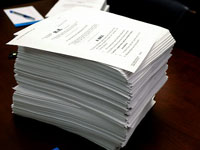 Have you read the 2300 pages of the newly passed health care bill? I haven't either. But as one report summarized the Patient Protection and Affordable Care Act that the president signed this week, it is "the most sweeping expansion of government social policy in more than 40 years, and perhaps the most polarizing." Regardless of your personal convictions about the new health care law, most all of us are agreed that its protracted debate certainly did not bring out the best in civil discourse, did it? And I wonder if all of this is a harbinger of days to come, the grinding gridlock of political process and national governance that in a time of economic (or any other) crisis could unexpectedly veer this nation down a pathway long predicted but hardly anticipated. But never mind that notion right now.
 At what point does a thinking person become concerned with nuclear proliferation in the Middle East? This Tuesday both Israel and Syria announced their intentions to produce atomic power plants, ostensibly for peaceful energy-generating purposes in their nations. And of course the world has been warily keeping an eye on Iran as it proceeds with its own nuclear power program. And now word on the street is that Egypt, Jordan and United Arab Emirates are also eager to develop their own nuclear power. And who’s to blame any of them? After all, nuclear fission is environmentally cleaner than coal-burning, avoiding the belching of fossil fuels into our atmosphere, thus theoretically reducing global warming and its effects. The small matter of nuclear waste storage, of course, is a perplexing down-side to atomic power. But viva nuclear fission—and a brave new world precariously balanced on the edge between peaceful energy and nuclear weaponry.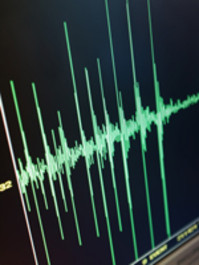
 In the space of one and a half months, our hemisphere has suffered two immense killer quakes—the 7.0 magnitude quake that leveled Port-au-Prince, Haiti, January 12, and left 230,000 dead and an entire country in economic ruin; and the magnitude 8.8 monster that ravaged Chile last Sabbath morning, unleashing destructive tsunamis in its wake (one eyewitness reported a wall of water “fifty feet” high). While the Chilean death toll was a small fraction of that in Haiti (because of enforced earthquake construction codes), the energy released by the Chilean quake was so immense scientists are now telling us it knocked our planet 3 inches off its axis, thus shortening our day by 1.26 microseconds. Our hearts and our prayers (and our financial gifts—go to
 Why are the “talking heads” so glum? Thomas Friedman, in his Sunday column in the New York Times, reported that because of the economic downturn the residents of Tracy, California, are now going to be charged to use their emergency 911 service. You can pay $48 a year to cover unlimited 911 calling, or you can wait and be billed $300 for every time you have an emergency. “Welcome to the lean years,” Friedman opined. For the past seventy years Americans have lived off the fat of the land. Our parents may have been the Greatest Generation, but we have become the Grasshopper Generation, Friedman observed, “eating through the prosperity that was bequeathed us like hungry locusts.” But after the feast comes the famine. “Let’s just hope our lean years will only number seven,” referring to the Genesis story of the crippling Egyptian famine.
 “An estimated 1 million kids orphaned by quake.” That stunning headline is enough to break your heart, isn’t it? Barely two weeks into the Haitian catastrophe, and the unfolding saga keeps peeling back layer after layer of the immense heartache and suffering that our Caribbean neighbors are enduring.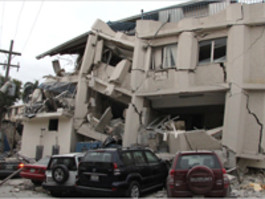
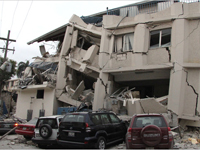 Haiti’s devastating earthquake on Tuesday afternoon is our crisis, too. As I sit here and write the next morning, initial reports from Port-au-Prince indicate that much of the capital city of nearly 1.5 million residents lies buried beneath collapsed rubble, as the result of the 7.0 magnitude record-breaking temblor. The Parliament building, the presidential palace, the United Nations mission headquarters, hospitals, schools, churches and untold numbers of apartments, houses and tenement buildings have been flattened. How many lives have been lost in this epic disaster no one, of course, yet knows. Some already fear untold thousands of casualties.
 Do you really think new “pat down” measures at the airport will make air travel more secure? I read a piece by syndicated British columnist Gwynne Dyer, and I’m afraid he’s right. In response to the Christmas Day attempt to bring down that Detroit-bound airliner through concealed explosives on one of the passengers, government officials have had to devise some sort of official “upgrade” to our present travel security to assure the traveling public that the skies once again are “friendly.” Dyer comments, “It is the duty of all public officials to ‘do something’ whenever a new threat appears, even if there is nothing sensible to be done.” The truth is that profiling international travelers by nationality or country of birth or origin (as the new security regulations do) not only lumps vast numbers of innocent people into the category of “suspicious” (or, guilty until proven innocent), it assumes that terror and terrorists are limited to these watch-listed nations (which is hardly true). And as for hand searches, most agree that the only effective method of full-body screening would need to include “body cavity searches.” And the public will not stand for that, will we?