If God were standing up front beside a white board right now, and we asked him to please write on that board what his top agenda is, what do you suppose he would put up as #1? For Andrews University? For Pioneer Memorial Church? For our world? What if you asked him to write up his top priorities for your own life? What would he write up for my life? Ever wonder what God thinks is most important around here?
John Franklin in his stirring book, And the Place Was Shaken, makes a point that I’ve continued to ruminate over these past few weeks. He writes that the secret to transformational prayer—praying that turns the world upside down, or at least right side up—is moving from our own agendas to God’s own agenda. I.e., moving from a prayer-paradigm that focuses on me-me-me, to one that focuses on God-God-God. As evidence Franklin directs our attention to the greatest prayers of the Bible—from Nehemiah 9 to Daniel 9 to II Chronicles 6 to Acts 4 to our Lord’s prayer the night of his betrayal in John 17—in all of them, note how the prayers are radically God-focused from the very outset, and how the personal agenda of the pray-er is saved until the end of the prayer. Whereas in my prayers, how often do I plunge immediately into my list of wants and needs, i.e., my personal agenda?
What would happen if when we gathered to pray together corporately, or even when you and I prayed privately, we were proactive in seeking to keep God and his revealed agenda for us front and center during our prayer time? What if the psalmist was right, that in prayer to God, we are to “enter into His gates with thanksgiving, and into His courts with praise” (Psalm 100:4)?
I’ll be honest with you. John Franklin’s counsel regarding corporate prayer in particular is challenging me and the way we’ve always “done” prayer meeting in the past. But as I wrestle with what God must be longing for for Andrews and for Pioneer, I’m burdened to bring our corporate prayer life into harmony with the way God’s people prayed long ago. If you’d like to join me this fall in seeking to know God’s mind and heart for this university in particular, I wish you would come and help me reshape our House of Prayer experience on Wednesday evenings. It may not “feel” comfortable at first, but with your help and prayer partnership, I firmly believe that together we can learn God’s agenda for this place and that our prayers can consequently be ignited as we embrace it (and Him) as our own.
Student, faculty, community—come, and let’s pray together. House of Prayer. Wednesday, 7 p.m.
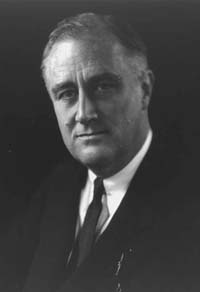 On March 4, 1933, the newly elected president of the United States delivered his inaugural address to the nation. Four sentences into that address, Franklin Roosevelt uttered the words that have lived long beyond his four-term presidency: “So, first of all, let me assert my firm belief that the only thing we have to fear is fear itself—nameless, unreasoning, unjustified terror which paralyzes needed efforts to convert retreat into advance.” So spoke the nation’s leader in that dark hour of economic despair. Because that’s what leaders are raised up to do, is it not? To call the people, the populace, the public to renewed confidence and hope for the journey yet ahead, to remind them of their “rendezvous with destiny.” That’s precisely what an aged leader named Moses did in an ancient book that becomes the grist for our worship journey this new season. Deuteronomy is in fact the farewell address (no doubt the longest farewell address in history!) of that beloved leader to the children of Israel who had literally grown up under the tutelage of his forty year administration. As we handle the document and text of his last will and testament to this community that had exhausted four decades of wandering in the bleached, barren wilderness south of Canaan, we will ponder the notion that in their wanderings lies the tale of our own journey toward the Promised Land. For the apostle firmly asserts: “Now all these things happened to them [in the wilderness] as examples, and they were written for our admonition, upon whom the ends of the ages have come” (I Corinthians 10:11). Have “the ends of the ages” come upon us? And are we prepared for the high calling of that “rendevous with destiny?” What are the lessons of and for “the chosen?” Journey with me this season as we track the sandy footprints of that chosen generation long, long ago. And in Moses’ appeal to remember, may we heed the call of another leader who spoke courage into the uncertainty of a journey that yet remained: “We have nothing to fear for the future, except as we shall forget the way the Lord has led us, and His teaching in our past history” (Life Sketches 196). Nothing to fear, much to remember, and a future to claim. It is the shining hour of “The Chosen.” Shall we not seize it?
 How would you like to teach school in New Orleans? The government is endeavoring to attract new teachers to what, even before Hurricane Katrina, was one of the toughest and most challenging school districts in the nation. But now in the post-traumatic stress of that crippled city, recruiters are offering to every teacher willing to move to the Crescent City a two-year signing bonus of $17,000. Any takers? Fact of the matter is that whether you teach in New Orleans or Benton Harbor or Berrien Springs you’ve signed on to a very demanding profession. U.S. Department of Labor statistics report that there are now 3.8 million preschool through high school teachers (public and private) in the United States, with annual earnings ranging (in the latest statistics available) from $26,730 to $71,370. Any takers now? But sit down with a school teacher, private or public, and inquire the motivation that keeps the teacher returning to that noisy classroom day after day, and I predict you’ll not hear a word about “the compensation package.” And probably not too much about the working environment or physical plant either (which isn’t to suggest that such factors aren’t important or vital to these professionals). But to a man and woman among the teachers I’m privileged to know (and work with) the gut motivation and heart response keep coming down to a personal passion for kids, a love of learning and teaching and the desire to change this world one life at a time. And the rewards? Years ago the screen play “Mr. Holland’s Opus” powerfully portrayed the payoff of a high school music teacher, whose dream to compose a world-class opus was perennially preempted by his devotion to the kids who tromped through his band room year after year. Their surprise rendition of his unfinished opus at his retirement program captured the compelling truth about teachers—their greatest life compositions are played out in the lives of their students long after school days are over. I carry these two quotations in my Bible: “Remember now your Creator in the days of your youth” (Eccl 12:1); and, “What line can we dwell upon that will make the deepest impression upon the human mind? There are our schools” (FE 529). In that juxtaposition is the reason why I thank God for the hundreds of dedicated Christian teaching professionals in this parish. Let the school bells clang—our kids are in the right hands!
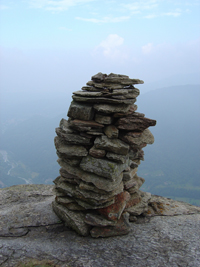 If the rocks could talk, what a tale they would tell. Having just returned from four days in the Piedmont valleys of northwestern Italy with a class of architecture students here at Andrews University, I can only imagine the stories that are etched deep into the crags of the rocky sentinels that guard the seven valleys of the Waldenses. Jetlagged I woke up early our first morning beside the Pellice River and walked the valley just as the first orange rays of sunlight were illuminating the ragged snow-capped peaks ringing the green fields and forests beneath them. A thousand years earlier clusters of men, women and children—faithful to the witness of Christ and his truth—had lived in small granite walled and roofed houses, the ruins of which still dot these valleys. And into the pagan darkness of the Middle Ages those Waldensian alpine communities shined the light of unbroken truth, passed on from generation to generation. In fact it is to them we owe the preservation of Holy Scripture, taught to their children, memorized by their youth, painstakingly hand copied onto parchment by the adults and hidden away in their mountain refuges. But the crimson tragedy of Waldensian history has proved true the words of Christ: “And this is the condemnation, that light has come into the world, and men loved darkness rather than light, because their deeds were evil” (John 3:19). And so history painfully chronicles the horror of those brutal crusading armies, sent on their mission of extermination by the powers that dwelt in the plains of Italy. We stood atop the Castelluzzo, a towering rocky promenade over a thousand feet above the Pellice banks, where entire communities of Waldenses were hurled off that precipice. We walked the streets of the ancient La Torre village where the canons boomed at 4 a.m. on April 24, 1655, the prearranged signal to begin the massacre of its unsuspecting citizens. They still remember that extermination as “Bloody Easter.” So unspeakable was that crime against humanity that when Sir Oliver Cromwell read the eye-witness accounts of the slaughter, he declared a day of fasting and prayer across England. And yet, as Tertullian observed, “the blood of martyrs is seed.” The seed of Revelation 12’s woman. The remnant seed of the woman that the dragon will yet turn his wrath upon (v 17). But from that seed of faithful witness God will yet reap a global harvest of saved men, women and children. Having just returned from His alpine harvest fields of long ago, I recommit my life to the Christ of the Waldenses and to the truth he preserved through them. And I invite you to do the same. For if seed is what God yet needs, then let us be that seed He would plant in the valleys where we live.